Showing posts with label construction. Show all posts

Tuesday, 3 January 2012

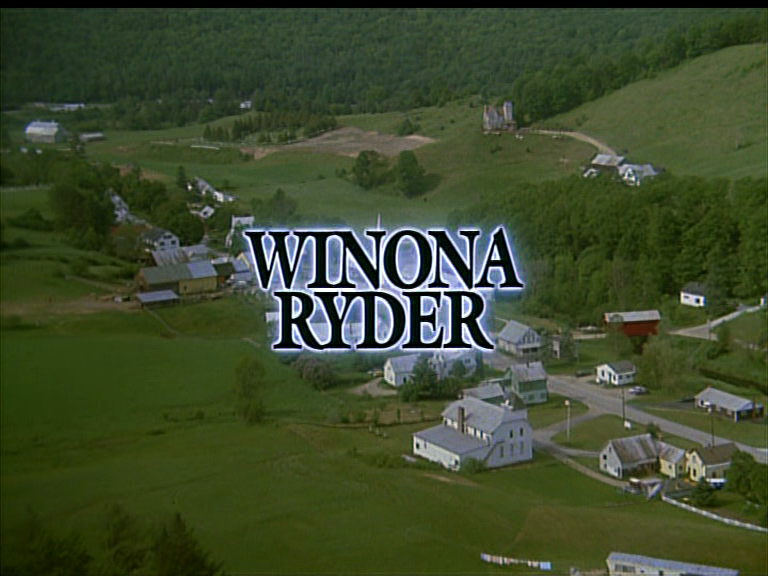
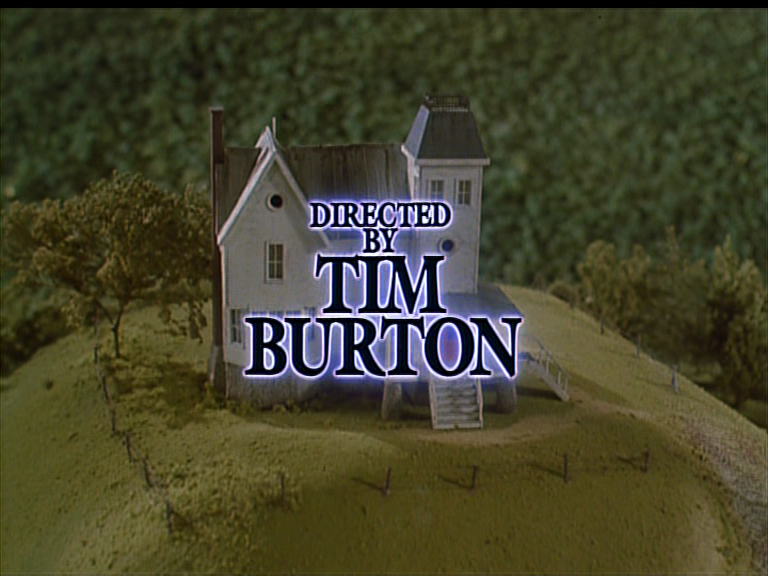
Our construction main titles 2- Fonts

After looking at the fonts featured in films, Alex and I looked very hard into the Macs for a font that suited our film.

For our main title 'Inspector' Alex and I wanted the title to appear over the visuals and then for it to remain over black until it fades out. After messing around with the transitions, Alex and I also decided that it would look especially mysterious and delicate if the title faded in onto the screen before as well as fading out. The font we used (Courier New) is similar to a Serif font because it has flicks at the end of the letters and in the corners for example:
S rather than S and N rather than N
This font is considered more formal than a font which is not a serif. This makes the film look as if it is part of a professional business which is similar to and reflects the genre of Film Noir. The font looks a bit similar to that of a typewriter which with the title 'Inspector' connotes to business and Film Noir. But the font isn't fully a formal one as it has a white outline with a black filling which makes the font look modern and slightly more fun. This too reflects our genre. The size for the font we used as 116pt. This was the limit the font could take to fill up the entire screen with the whole word being on one line. As our film is only a one worded title we wanted it to be as big and obvious as possible.


Most film's have a special way of presenting their fonts for a film. In big blockbuster films which are part of a big scale production with lots of money, some films have their own font created for them. Because this would take much longer as part of our task, the quickest and most successful way for our
film would be to use an already created font and put our own spin on it. After looking through the many fonts that were available for us on the Macs and the iMovie, we found that the basic font of 'Gill Sans'

in the size 24pt bold fitted quite well. The font also has an outline to it
compared to what it would be as a defult. We wanted the titles to be clear of the visuals and wanted them to stand out which is why we chose the fill colour of white as it stands out over the many different colours that feature in the visuals. Most films have different ways of presenting their titles for example a 'o' being turned into a 0 so it stands out or an 'a' being a '4' and most
commonly is the sure name is capitals or a different colour. We
liked this idea and so spelt all of the sure names featured in the titles in capitals so they stood out. We also used a style which meant that each letter in the
word are close together as you can see from the title
'Freddie' on the right. The letters are not too close that they are overlapping or legible, but enough that they look simple but have a small twist on it which makes the film an individual.


For the the first title used which shows who the film is by, we used the same font and size for the rest of the title to show the two names but for the word 'and' we used a different font to make it look professional. It also causes more focus on the titles as they do not, after a while, blend into the visuals for the audience so they are still aware of it. For this font we used 'Signpainter' which is a lot different from the two names in the font 'Gill Sans'. It looks more like a Serif styled font and looks professional.
For the name of the studio which is distributing our film 'Purple Mammoth' we chose to have their logo and jingle before our whole film. Even though with this transition and text on the iMovie it did not allow for us to change the font, we still felt it looked appropriate and professional from our research into other films. It was hard to find out what exactly the font was as we could not change it, but from looking at fonts I believe it is the default font Times New Roman which we would like to have avoided but it still fits in with the film. As Purple Mammoth is technically separate from our film as in reality it would distribute a lot of other films, we liked how it was different to our film as it didn't need a genre.

Wednesday, 14 December 2011

Our construction main titles

After looking at many different film opening titles for my research, Alex and I planned out the titles we are going to use before we go straight ahead and add them to our film.
Because our project is only 2 minutes long as that is the maximum, we knew we had to limit the titles we used because other big production films have longer titles altogether and are able to have a long list of names to add.

Even though wikipedia is an unreliable website to base research on, I found a page on it where it explained what normally features in the opening credits of a film. That page can be found here
The first opening credits is a shortened list of of the major actors, producers, directors, etc who have worked on the film whereas the closing credits feature a much more detailed and extensive list which can last roughly 4-5 minutes.
Although nearly all films before the 50s and definitely the 70s, did not feature ending credits and only used opening credits, our film is made in present day so it follows the 'norm' of today's basic opening credits. This norm is:
  • Name of studio
  • Name of production company
  • (Producer name) production and/or a film by (director name)
  • Starring (usually the main actors)
  • Film's title
  • Featuring actors
  • Casting by
  • Music (usually composed by or original score by)
  • Production design
  • Editor
  • Director of photography
  • Producer
  • Based on the book/novel by  OR  based on the characters by
  • Story by and/or Written by
  • Director / Directed by
Variations of these are below:
  • Set Design
  • Costume
  • Hairdresser
  • Makeup artist
  • Sound recording
  • Visual editor
Like I previous stated, Alex and I decided to feature a more condensed list of opening credits but to make sure we followed the ones regularly used and the standard ones to make sure we followed the codes and conventions of opening titles.

Most films, we decided, show their studio or distributor over black (depending on their chosen logo but they usually are over black) Here are some examples from my research I have used throughout this assignment.
Beetlejuice 1988
Inception 2010
Fight Club 1999
Pulp Fiction 1994
The Other Boleyn Girl 2008
Limitless 2010
From this research we created our own 'Studio' who funded our film and created a little logo and title for them over black.


Also from our research..
Limitless (201)
Raising Arizona 1987
True Grit 2010
The Other Boleyn Girl 2008
we chose to include our 'Production Company' and 'a film by' over the first visuals. This is the first appearance of our names and as most film's show 'a film by' we followed this technique. Usually it features the directors name(s). Our whole production is an equal group effort and input so we put our names together on the front to show it is a film we both created entirely.
Fight Club 1999
Beetlejuice 1988
Kick-Ass 2010
Now we chose to show our main 'actors' in the top right/left and bottom right/left corner of our visuals. The right and left would change each time.

We decided to use the important standard titles for our project as by this time we only have roughly 40-30 seconds left of our project and want it to look professional still. We include a casting director, music by, production design, written by and finally, director.
An actor in Limitless 2010
An Actor in Beetlejuice 1988
Castin in The Other Boleyn Girl 2008
Costume in Terminator 2 1992
Written and Directed by in Ferris Bueller's Day Off 1986
Music in Kick-Ass 2010
Our main film title features before any titles first appear. The title will appear at the end of our cold open 'prolouge' (first part of our film). Then the rest of our credits will follow.
From research I found that most film's end their opening credits with the director. We chose to follow this in our production by making our last credit the director.
Examples of film's last credit to be director
Ferris Bueller's Day Off 1986

Beetlejuice 1988

Fight Club 1999

Kick-Ass 2010

The Other Boleyn Girl

Terminator 2 1992
For the most part, we made up names to use in our opening credits, but where we could be honest, we used the names of people w ho actually were a part of our production.
Studio - Purple Mammoth - a company Alex and I created in a media lesson prior to our practical.
A film by - Nadine and Alex - our full names as we are a team
Starring- Gavin Bedford, Fiona Kettle, Sebastian King, Freddie Hitchcock, Phoebe Kudrow,  - Gavin and Fiona are actors we know. Gavin featured in our film but we did not require Fiona. The other three are made up names
Casting director - Tony Stone - a made up name
Original Score - Tom Spall - a made up name
Production design - Leanne McArtha - a made up name
Written by - Nadine - me
Produced by - Laura Skelton - a friend who's name we used as a thanks as she offered to act in our film
Directed by - Alex Matthews - my partner

Tuesday, 13 December 2011

Narration

After researching different films which similarly featured the narration in the prologue or first scene (here), Alex and I worked on the narration for our film. As part of our planning, we came up with two scripts and spent time saying our script over the visuals itself to see which worked better and then to work on a plan of our entire film as if we were creating the whole thing, to see which would work better as a narrative.


Script 1-
They always say 'what you don't know won't hurt you', but in this instance, 'they' are wrong because it did hurt me...a lot.
[pause]
It's kind of complicated to explain so I'm going to have to show you.
It all started on the day of my job interview.


Script 2-
You that body on the floor? That's me. And yes I am speaking to you right now as you watch me on the floor. It's  not my fault I'm there by the way and I guess you want to know how I got there. It started on the day of my job interview.

Both scripts we created end with a reference to a job interview. This explains why the character gets prepared in a smart suit with a briefcase.
Script 1 is less chatty compared to no.2 and the first also includes a quote of importance which refers to the films plot 'what you don't know won't hurt you'. Many films use a quote in their first narration.
Because the first script explains that they have been hurt in a way, this is a form of the Enigma Code as the audience want to know what has happened to them for them to be in that situation. The first script covers enough information for the audience to understand and relate to the character narrating but not enough for them to leave the film as they will have to continue watching to find out.

Even though both scripts are short, if we include too much information to last the whole prologue which is roughly 52 seconds, this could be dragged out and cause the audience to get bored especially if it ends up repeating it's self. It would have been better if this was longer, but as everything in condensed into 2 minutes compared to big production films, our narration stays this length and in this form.

After a few practises to see which one fitted better, Alex and I decided on the first script for our production.
We used the same actor who features in our film to narrate. This is the only piece of dialogue we used throughout our film as it does not require any dialogue in the 'preperation' scene or in the scene where the character is dead on the floor.
As our school does not have professional recording equipment and Alex and I could not get hold of any, we used the Macs which were available for us. Because of the small room t he macs are in, there is a slight echo in the narration we filmed but there was no way of overcoming this. It sounds a bit too prepared and unnatural because of the quality and actors voice, but there was no way of overcoming this.

Edititng/Soundtrack in construction

Our last day of filming was Sunday 27th November and luckily for Alex and I, our next media lesson was the day after, Monday 28th November. We had a double lesson so we were able to upload and all of our footage and were able to start placing the right clips in the right order following our storyboard.
The week before we had a school trip to visit an Apple store where we had a workshop in how to use the new iMovie. The updated iMovie is different to the one Alex and I used at GCSE and we found this workshop helpful. Because of what we learnt at the workshop, placing all our clips of film into the right order took us no longer than 30 minutes because we had just recently used the software and we had all of our clips we needed.
Here is a screen shot of our editing process on iMovie on the school's A Level Apple Macs. (Note: This screen shot was taken near the end of our editing process which will be explained further in this post)
By trimming down clips we were able to sync together different clips to make them look continuous.
After the clips were in their right order it was now time to create transitions for them. For our film, we decided we would only need a few transitions which would be for the fade to black and the titles. Before we could finalise our film's titles we made sure we had all the music and soundtrack complete on our video.
Alex owns lots of CDs from the company 'AKM Music' which sell CDs with copy right free music on them if you have purchased the CD. Alex and I looked at the different CDs of these that Alex owned and picked the ones that matched the 'Thriller' genre and matched, correlation and worked with our visuals.
The first piece of copy right free music we used is titled 'Look Inside Altrock' for the second part of our film. This track is upbeat but not too excited or loud. It fits the mood of the character who so far the audience do not know anything about apart from that he gets into trouble later on. It fits his character of a laid back, casual, indie young man.
Then after about 30 seconds, the track becomes a little mysterious by adding a few different pitches
(Post on narration here) The other piece of audio we used was the voice over by the actor in our film. This was done on the Macs we used to edit. We had 4 takes of recording the same script in case there was any loss or muck up with any of them and that we could use different parts of each recording instead of one continuous recording.

The only problem we faced when editing was that we could not split the voice over recording but we overcame this because we had recorded 5 voice overs to edit and use.


White balance
After the films were in the right order and the music was fitted in the places we wanted, we slightly edited the colouring of the first part of the film. This was to make the film look colder and cause the audience to feel a little uncomfortable by looking at a dead body. The new software for iMovie allowed us to do this because it features a palette which can select and brighten or darken the colours on the screen. We used a bleak white and blue colour on all pieces of film that featured before the main title.

Saturday, 10 December 2011

First storyboard for final idea

This post is late because of technical difficulties getting the pictures and putting them together on a document.
Here is my first storyboard for mine and Alex's final idea.

(Click to see larger)


Our construction main title

Alex and I decided to begin researching film titles once we were under way with editing and the final stages of our construction. This was so we could relate it to our film instead of basing the film around the title.

From our knowledge of film titles, Alex and I liked the idea of just a one word or two word title.
A lot of film titles, not just thrillers, use a one word title so it is emphasised in one word and iconic. The short word is also easy to remember and easy to tell other people about (a way of selling the film). Examples are; Avatar (2009), Inception (2010), Superbad (2007), Limitless (2010), Gladiator (2000), Watchmen (2009), Oldboy(2003), Wanted (2008), Milk (2008), Scarface (1983), Cars (2006), Ghost(1990) and so on.
Following our genre 'thriller/film noir', we researched titles on imdb for the titles of films from this genre. IMDB holds nearly every film title in the world over years and year so it was easy to do our research here.

Some examples we found of various types of thrillers and hybrids; Super 8 (2011 dir. JJ Abrams) sci-fi thriller, Psycho (1960. dir Alfred Hitchcock) horror thriller, Jaws (1975 dir. Steven Spielberg) horror thriller. Super 8 refers to the camera which is used in the film. A character in Psycho is, a psycho. Jaws refers to the teeth of a shark which is what the film revolves round. Other film titles with one word under the thriller genre are; Memento, Inception, Seven, Fargo, Serendipity, Taken.
The title for 'Taken' refers to the action of taking something as this film involves a girl being taken away from her father. Inception is a word which means the start of something but for the 2010 film by Christopher Nolan
 is it a new word which refers to an action within the film. Seven refers to the 7 deadly sins which feature in the film. Fargo refers to the setting of the film. The word Memento is known as something important which is kept like a souvenir of a person or event. The film is about a man who's wife was killed but he suffers memory loss and so he tattoos stuff to remember on his body and takes pictures often, this is considered his mementos. Serendipity is defined as a 'happy accident' which is what the romance film centres around.

Other titles are usually names. Briefly mentioned above is the drama biopic Milk which is about Harvey Milk an American activist. Animation Coraline is about a young girl with the same name. A very popular title which was first created as a comic is the title 'Batman'. The boxing film Rocky is about a fighter named Rocky Balboa. Another animation film, Shrek, has the main character with the same name.
We thought about this and liked the idea of the name of our actor (Gavin) but spelt in a different way.

Gavyn - We liked this idea as it look unusual, bu after research we found that this is a common spelling for the name in certain parts of the world and so it would not have the same impact all across the world.

Full Blast - Even though this title is two words, it's a short title and implies that there would be explosions, deaths and guns used in the film which reflect ours genre. This was our title for a few days and when it came to editing, we tried the title out on our film but we found it did not match with what the visuals were representing.

Inspector - This was our final title idea. Inspector connotes to suits and people in business which is what our main character is involved in. The title and it's connotations fits in with the thriller film noir genre because of the suits and upper class characteristics. We messed around with having 'The Inspector' or just 'Inspector' and decided that Inspector sounded better as it stands alone and adds mystery because the main character isn't necessarily the Inspector.